
According to OECD data Korean students have very strong academic motivation, but their life satisfaction ranks among the lowest in the world.

In Korea, education has long been built based on "achievement" and "competition." But, recent OECD PISA results and other domestic and foreign studies show that Korean students are highly motivated in studying, but at the same time feel less satisfied with life. This raises a deeper question about how education affects students' happiness. The study explores the relationship between education and happiness, and also look into some examples from Korea and other countries to think about better direction for student-centered education.
Statistical Sources and Tables on Factors Influencing the Correlation Between Education and Happiness
High motivation but not high happiness – Korean students' paradox
The 25022 OECD PISA data shows that 15 year old Korean students scored 6.4 out of 10 in life satisfaction, which is clearly below the OECD average of 7.3.
But at the same time, more than 80 percent of Korean students answered that they want to be the best in whatever they do - well above the OECD average of 65 percent.
Also, over 75% of Korean students expect to enter university. However, the same percentage of them said they worry about getting low grades. This number is also above the OECD average of 66 percent.
This suggests that although students are highly motivated, They suffer from heavy pressure and anxiety in a school system that focuses too much on grades.
How can the educational environment make students happier?
A high GDP does not necessarily make children happier. A 2006 study by UK’s New Economics Foundation said that countries with higher GDP are not always happier.
To understand what drives students’ happiness, experts say it is necessary to look more closely at the educational environment.
Important factors include how many students per teacher, how much money is used per students, how much percent of GDP goes into education, how much freedom schools are given(education dacentralization), and how much students feel satisfied with school or want to stay in school.
Most OECD countries are now trying to reduce the number of students per teacher.
This is because with fewer students per class, teacher can focus more and students can get more attention and help.
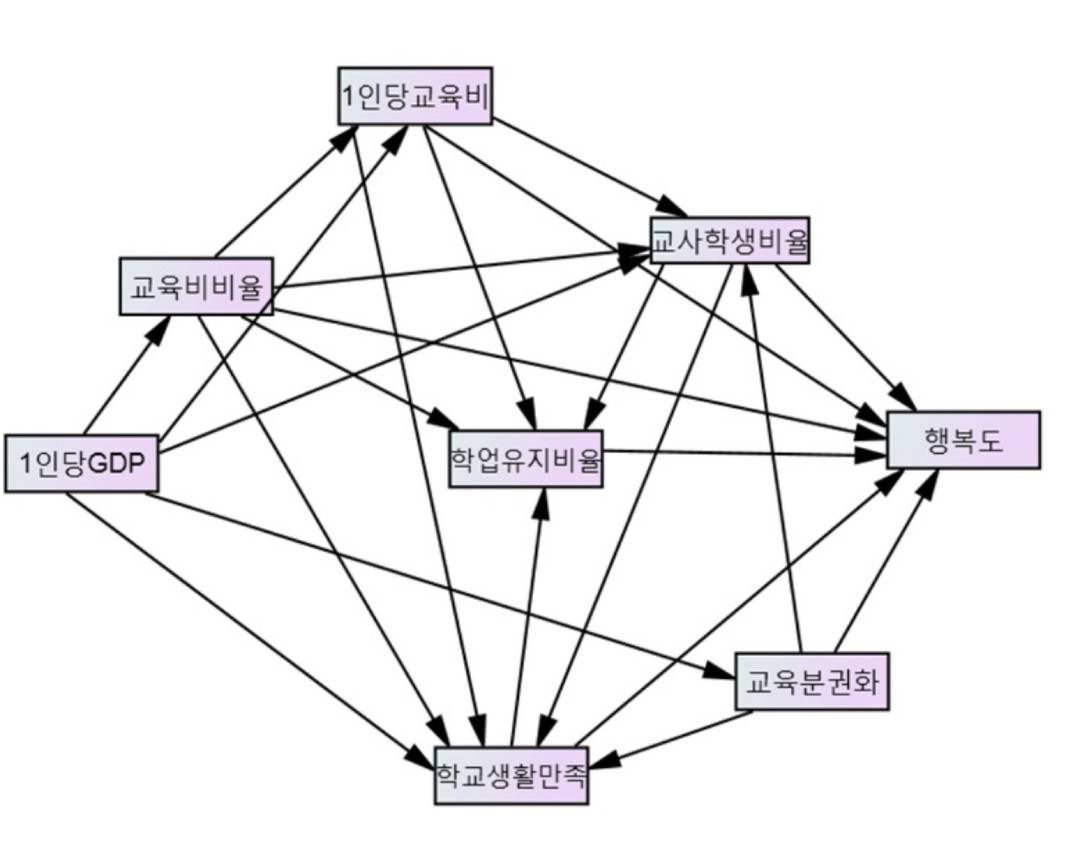
Factors Influencing the Correlation Between Education and Happiness
UK Example: Character Education at the University of Birmingham School
One notable example is the University of Birmingham School in the UK.
The school focuses not only on improving student grades, but also on developing students’ character and social skills.
This school is working together with a group called "Jubilee Centre for Character and Virtues"
from the university.
The curriculum is based on four types of virtues: moral, civic, performance, and intellectual.
For example, in science class, students not only learn the contests, but also work on developing values such as curiosity, honesty, and teamwork.
And every Monday, students take part in "reflection time," looking back on the past week and discussing with friends.
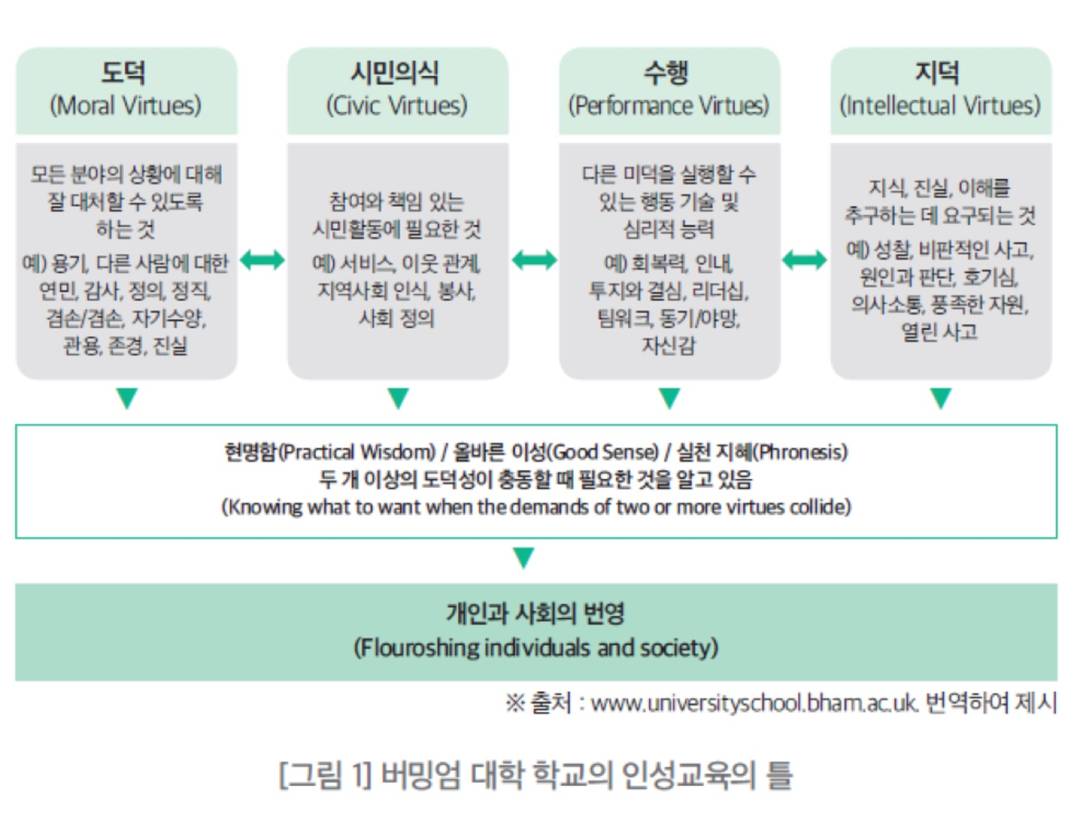
We should think again — What is the real goal of education?
The data shows that even if students have good grades, it doesn’t mean they are happy.
Sometimes, too much competition and pressure make them feel worse, not better.
The question remains our passion, and changeable stuff.
“What stays forever in our life is not money or being famous. It's a character. That’s where the right view of the world comes from.”
— A student at University of Birmingham School