

As 2025 is hailed as “the Year of Innovation.” the world is racing toward extraordinary progress. Yet behind the accelerating pace of technology and the economy, those struggling with poverty are being swept away by the waves of rapid change, deprived even of the chance to keep up.
Struggling with poverty eradication is not merely about lowering poverty rates; it is a core challenge addressing the future sustainability of the international community. The United Nations (UN) has set a goal to eradicate extreme poverty by 2030. Yet as innovation accelerates, the world’s poorest are being left further behind on and on. This change is acting as a risk rather than an opportunity. As digitalization transforms education, culture, and economy, those who are lacking in basic needs remain isolated from society.
Meanwhile, experts predict the next five years will be a crucial period for innovative technology and the economy. Artificial Intelligence (AI) technology is expected to achieve outstanding(remarkable) developments during that time. The AI industry is projected to grow to $826.7 billion by 2030. Owing to this outlook, people will strive to get information and develop technology more and more all over the promising industry. Furthermore, surging demand for generative AI, digital textbooks, and online lectures is transforming supply models in education, culture, and industry.
Such changes require massive financial and technological infrastructure. Those without it will be left behind in the era’s great technological infrastructure. Those without will be left behind in the era’s great transformation.

[John Maynard Keynes] once pointed out this paradoxical reality as “Poverty amidst Plenty,” where technological progress actually deepens polarization.
According to OECD data, adults from households in the bottom 25% income bracket use the internet in their daily lives at a rate that is on average 25.9 percentage points lower than those in high-income households. In an era where the internet has become essential for education, employment, and cultural participation, this gap translates into a new form of poverty — digital inequality. In fact, while AI-based learning and online education platforms have become a major trend in some countries, students who cannot afford to purchase devices remain excluded from the classroom. As technology development accelerates, a structural contradiction showing “majority excluded from participation” emerges.
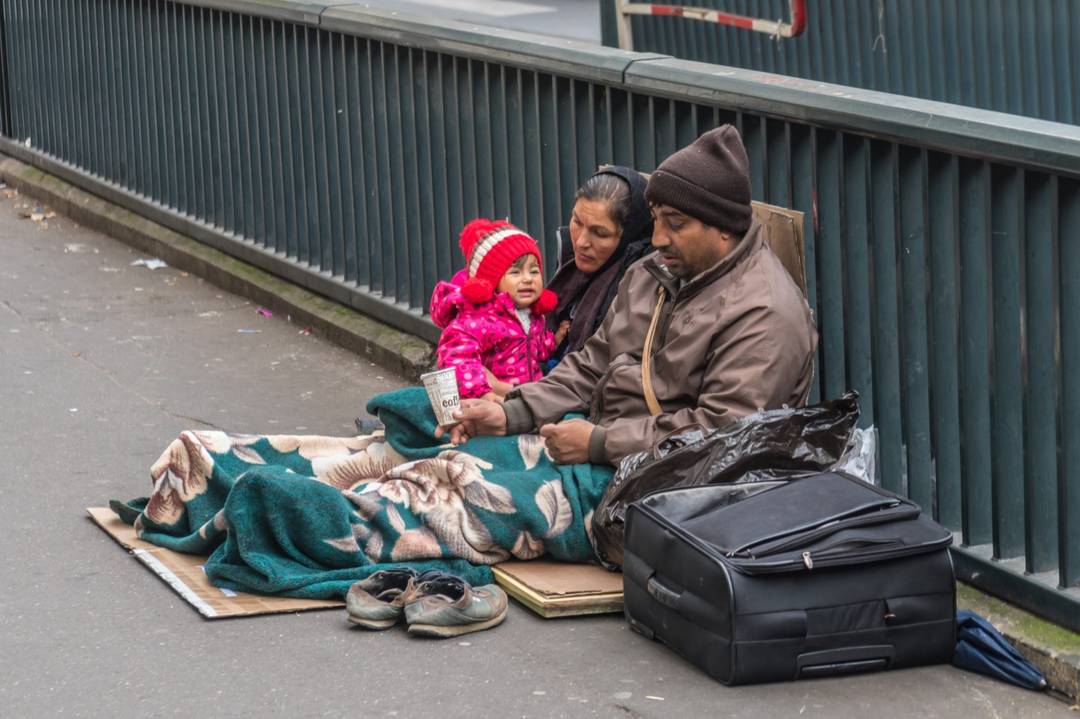
Last year, Eurostat reported that in 2024, around 93.3 million people across the EU — equivalent to 21.0% of the total population — were at risk of poverty or social exclusion. Regardless of globalization and digitalization made wide connections across the world, they still left behind the “excluded bracket”. The United Nations estimates that around 1.1 billion people worldwide continue to suffer from deprivations across multiple dimensions — including education, healthcare, and living standards. This would not only lead to a lack of income but also isolate them from the global community. The fact that so many people continue to be left behind poses a major challenge to our era, which is often driven primarily by innovation.
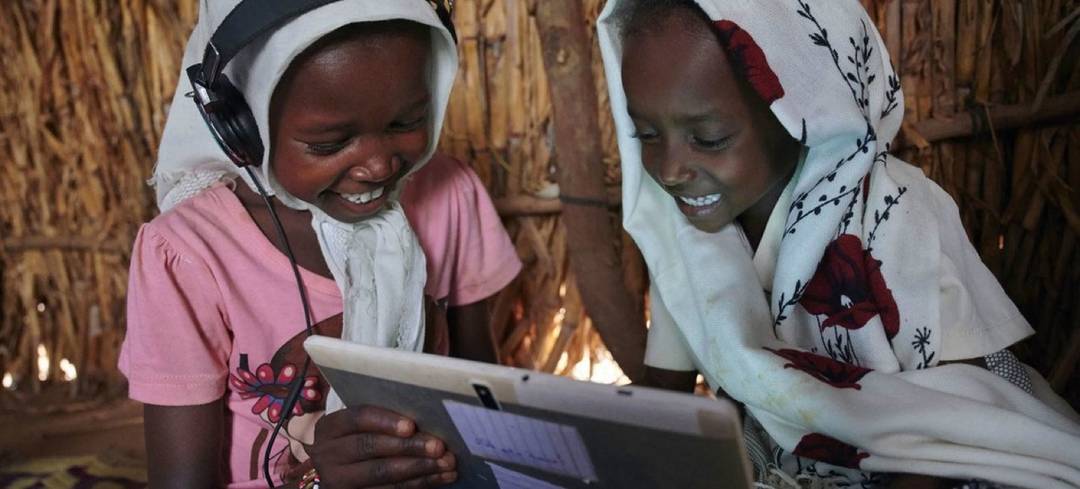
In response to these challenges, governments, and businesses have worked to address poverty. Further, many institutions propose projects for accelerated technological development in underdeveloped countries. Other notable cases using Information and Communication Technology(ICT) like microfinance, and enterprises targeting the “Bottom of the Pyramid” (BoP) segment called “BoP business”. They tried to integrate low-income brackets not only as consumers but also as producers. Such approaches enable people with extreme poverty to participate in markets, fostering both consumption and economic engagement.
The next five years represent a pivotal juncture for humanity. Whether innovation narrows or widens inequality will depend on the policies and cooperation of the global community. Poverty is not a simple problem of certain brackets — it is a threat to the sustainability of the global community. It is not theirs alone; it is a shared issue that both the impoverished and the rest of society must address together. We have now reached a point where we must ask ourselves: what is the true purpose of our innovation?